
Class 9 English Chapter 1, How I Taught My Grandmother to Read by Sudha Murty, is an inspiring lesson from the CBSE textbook Kaveri. The story is based on a real incident from the author’s childhood. It describes how her grandmother, Krishakka, feels helpless when she cannot read a novel on her own.
Determined to overcome this limitation, she decides to learn to read and write at the age of 62. With regular practice and strong willpower, she succeeds. The chapter highlights themes of determination, self-respect, and lifelong learning, delivering a powerful message about the importance of education.
How I Taught My Grandmother to Read – Part I
When Sudha Murthy was a 12-year-old girl living in a village in north Karnataka with her grandparents, the family eagerly awaited every week for the bus that brought the newspaper, post, and the popular Kannada weekly magazine “Karmaveera”. This magazine carried the serial novel “Kashi Yatre” by the famous writer Triveni, whose simple and touching stories about ordinary people’s lives were loved by everyone.
The story was about an old woman who wanted to go on a holy pilgrimage to Kashi (Varanasi) to worship Lord Vishweshwara, which many Hindus believe brings great merit. In the novel, there was also a young orphan girl who fell in love but had no money for her wedding.
In a moving end, the old woman gave all her savings to help the girl get married instead of going to Kashi herself, saying the orphan’s happiness was more important than her own pilgrimage. Sudha’s 62-year-old grandmother, Krishtakka (called Avva), had never gone to school and could not read, so every Wednesday Sudha read the latest episode aloud to her.
Avva listened with full concentration, remembered every word, felt a strong connection to the old woman in the story (both never went to Kashi), and later discussed the episode excitedly with her friends in the temple courtyard. One time, Sudha went to a wedding in a nearby village with her cousins and ended up staying a whole week.
The moment she returned, she was taken aback; Avva was crying, a sight that had never met her eyes, even in times of real struggle. That night, under the full moon on the open terrace, Avva sat beside Sudha, touched her forehead lovingly, and slowly shared her life story: she had lost her mother young, received no education because girls were not sent to school in those days, married early, raised children, and later grandchildren, always busy cooking and caring for the family. She regretted never learning to read but made sure her children and grandchildren studied well.
How I Taught My Grandmother to Read – Part II
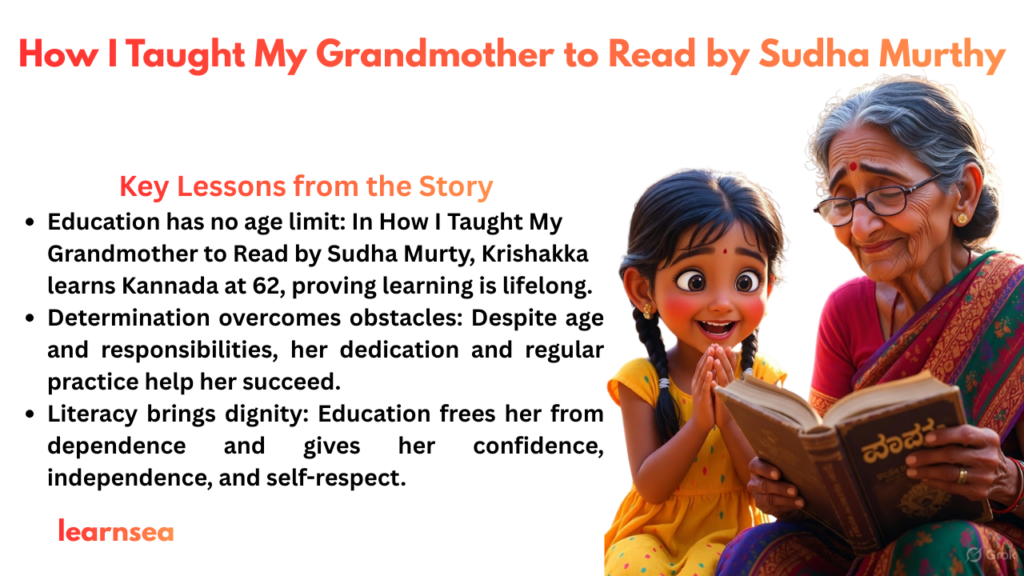
That same night, Avva explained the reason for her tears. While Sudha was away, the magazine had arrived as usual. Avva opened it, looked at the pictures of “Kashi Yatre”, and desperately wished she could understand the words, but she couldn’t read anything. She felt very helpless and dependent, even though the family was well-off.
She decided right then that she would start learning the Kannada alphabet the very next day and work hard so that by Saraswati Puja day during Dassara, she could read a novel all by herself and become independent.
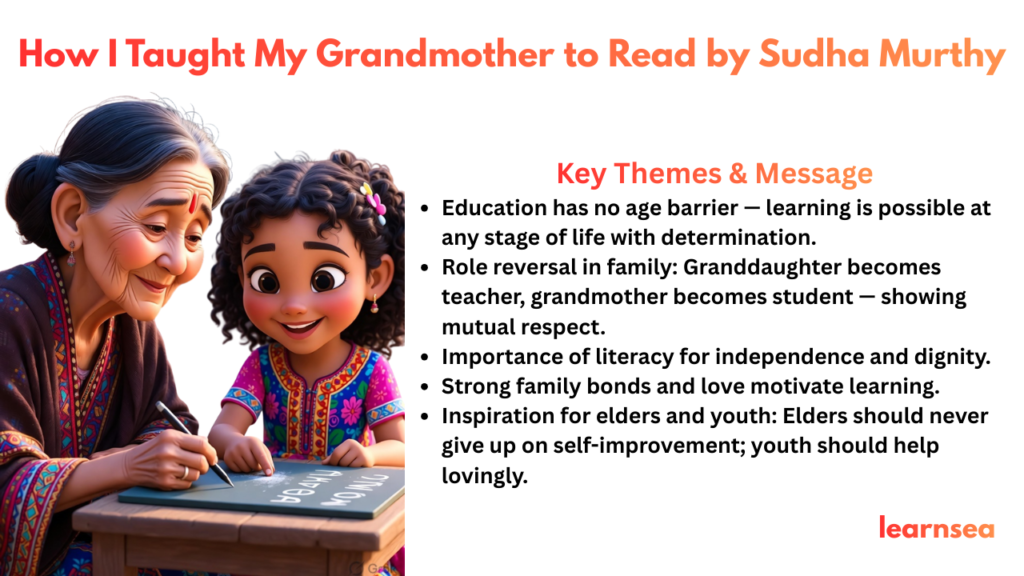
Sudha laughed at first, pointing out Avva’s age, grey hair, wrinkled hands, spectacles, and busy kitchen work, but Avva replied firmly: “For a good cause, if you are determined, you can overcome any obstacle. There is no age limit to learning.”
From the very next day, Sudha took on the role of her teacher, and Avva proved to be a sincere and dedicated student, practising reading, writing, and reciting daily with remarkable commitment. On Saraswati Puja day, Avva called Sudha to the puja place, gave her a gift of frock material, and did something surprising.
She bent down and touched Sudha’s feet. She explained that she was not touching her granddaughter’s feet but the feet of her teacher, to show respect for the person who taught her with so much love and patience. Now she could read any novel confidently and felt truly independent.
In return, Sudha gave her a secret gift- the full novel “Kashi Yatre”, which had by then been published as a book. Avva proudly read the title and publisher’s name aloud herself, proving she had succeeded. The story ends with Sudha feeling proud of her first student, and years later she herself became a teacher of Computer Science.
Conclusion
How I Taught My Grandmother to Read by Sudha Murty conveys a clear and meaningful message. Education builds confidence and dignity, and learning can begin at any age. Krishakka’s determination to become literate at 62 reflects courage, self respect, and perseverance. The chapter encourages students to value knowledge and remain lifelong learners.