

“Winds of Change” from the Class 9 Kaveri English Literature textbook. This NCERT Class 9 English chapter explores the spirit of freedom, courage, and personal transformation. It highlights how individuals can challenge old beliefs, embrace change, and make a positive impact on society. Perfect for quick revision, exam preparation, and understanding the theme and message clearly.
Winds of Change Class 9 Kaveri Book Summary
The word “pankha” (or “punkha”) comes from the Sanskrit “pankh”, meaning bird feather. While today “pankha” refers to any fan, “pankhi” was a small feathered hand fan used in ancient India. Clear evidence appears in Buddhist wall paintings at the Ajanta caves dating back to the 2nd century CE, as well as in embroidery, sculptures, and carvings.
In ancient and medieval times, pankhas served both practical and ceremonial purposes. Small pankhas fanned deities in temples, while large ones—sometimes requiring full arm strength—cooled kings in royal courts. Their sizes ranged from tiny two-inch fans to massive versions used in royal ceremonies.
Over centuries, pankhas evolved into valuable cultural and trade items, considered exotic and fashionable. Although their basic use was similar across India, each region, village, and community developed distinct styles using local materials such as bamboo, cane, palm leaf, silk, brass, leather, silver, beads, and stones. These were often decorated with intricate designs tied to geography, culture, and rituals.
Winds of Change Class 9 Detailed Summary for Quick Revision
In modern times, with the arrival of electric fans, pankhas have largely lost their everyday cooling function. They are now mainly decorative traditional handicrafts that reflect the cultural identity and artistic heritage of their regions.
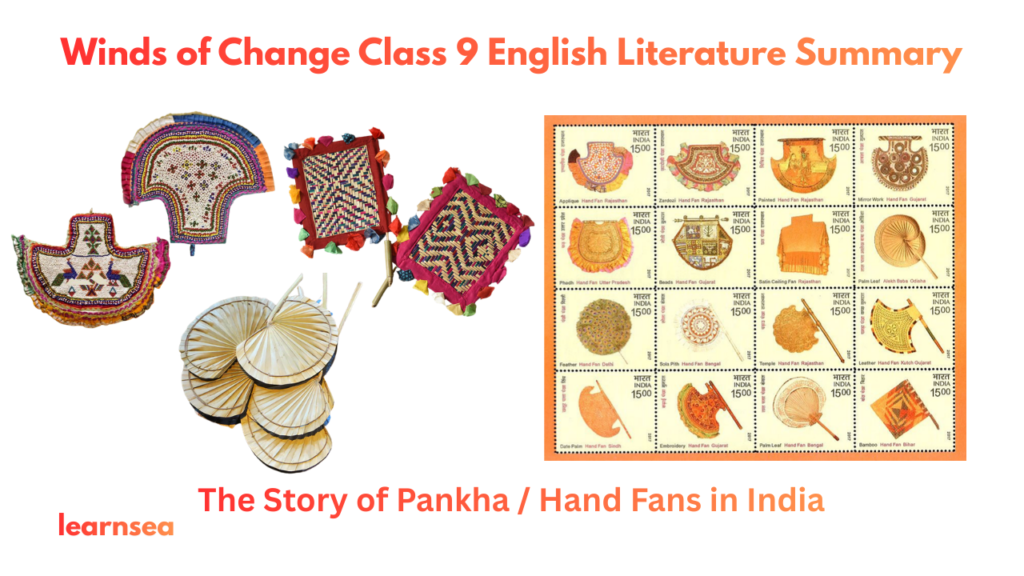
Specific regional examples include:
- Rajasthan: Appliqué hand fans (fabric sewn in patterns), zardozi fans (gold thread embroidery), engraved brass temple fans, and painted cardboard fans for deities.
- Gujarat: Cotton fans with mirror work, bead-covered fans with silver handles, and Kutch leather fans decorated with thread and wool. Women also create embroidered fans at home using traditional mirror work and cross-stitch.
- Bengal: Delicate fans from the spongy sola plant centre or palm-leaf fans (Tal Patar Pankha), commonly kept in Bengali homes.
- Uttar Pradesh: Phadh hand fans adorned with pure gold and silver zari, silk, and satin frills.
- Odisha and Bihar: Large palm-leaf fans in Odisha, and colourful bamboo fans in Bihar, both valued for their antiquity and rarity.
- Tribal communities across India: Grass, metal, bamboo, cane, and palm leaf fans, often featuring geometrical patterns, white ink on red backgrounds, and symbolic designs. Silk and brass were reserved for antique pieces.
Winds of Change Class 9 NCERT Summary
Many Indian tribes have adopted this handicraft, embedding local materials to produce beautifully designed pankhas. Although the traditional use for personal cooling is fading due to modern technology and lifestyle changes, the craft has become a commercial livelihood for artisans. Demand has slightly revived thanks to unique, region-specific designs.
To preserve this rich cultural heritage, it is essential to celebrate pankhas by appreciating their stories, artistry, and connection to India’s traditions. Initiatives like pankha-making workshops, held at handicraft exhibitions or cultural events, help spread awareness, allow contemporary artisans to showcase their skills, regain popularity for the craft, and provide a sustainable commercial platform. This ensures that future generations can continue this beautiful tradition.
In a Nutshell
Winds of Change Class 9 English Literature highlights the transformations in society and the personal growth that comes with new experiences. The story shows how individuals adapt, learn, and respond to changing circumstances. This NCERT Kaveri book summary helps Class 9 students grasp the theme, message, and key lessons, making it perfect for quick revision and exam preparation.